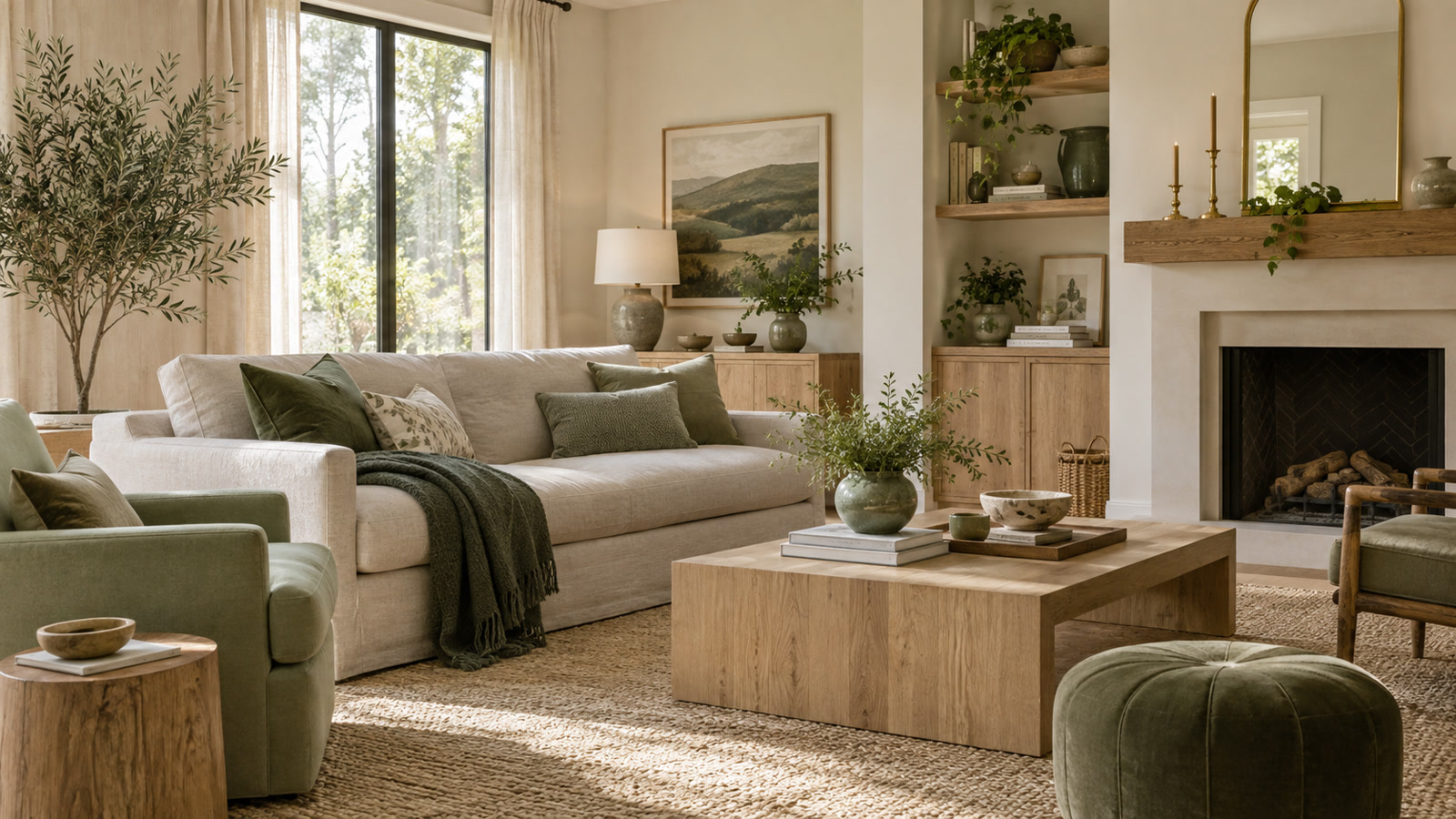
Make three decisions before you buy anything
A good palette usually starts with the room you already have, not a trend board. These decisions keep the new color connected to the things that are staying.
Choose the anchor
Start with the piece you are keeping or the color you cannot stop looking at. A sofa, rug or artwork can be a stronger anchor than a paint chip.
Read the light
Look at the room in the morning and again after sunset. The same green can feel crisp in bright light and muddy in a darker room.
Name the job
Decide whether the anchor belongs on a large piece or in smaller repeats. A color without a job tends to spread until the room feels accidental.
Give every room color one job
This is a useful starting split, not a law. It keeps the anchor visible while leaving enough quiet space for the room to breathe.
The base handles the largest areas. The anchor gives the room its identity. The deeper tone creates weight, while the accent and trim keep the room from feeling flat.
Three color stories that are easy to finish
Each palette starts with one clear anchor and uses materials that already make sense beside it.
Sage and light oak
Use warm cream for the base, sage on one upholstered piece and forest green in one soft layer. Light oak keeps it open.
Terracotta and sand
Let sand and clay carry the large areas. Use terracotta where you want warmth, then add walnut for enough depth.
Dusty blue and walnut
Keep the walls soft and use dusty blue on fabric. Walnut grounds the cooler color, while a small ochre detail keeps it alive.
Test one finished corner before the whole room
Paint samples help, but a room is made from more than paint. Put the wall sample beside the sofa fabric, wood finish and one accent object in the actual room.
Leave it there through a full day. If the group still looks connected in daylight and lamp light, you have enough evidence to keep going.
If one piece keeps fighting the group, change that piece. Do not rebuild the entire palette around the loudest mistake.