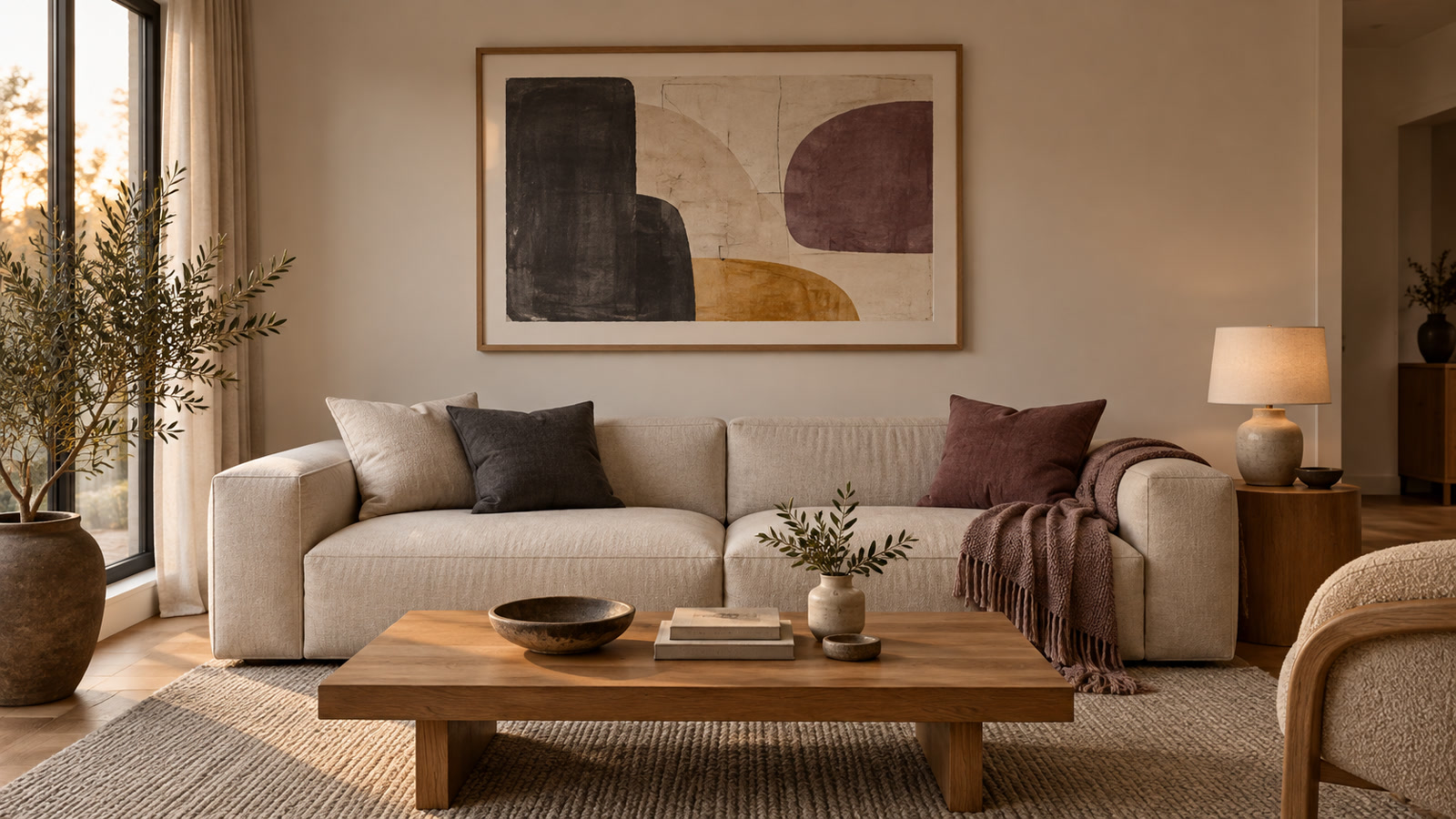
Let the furniture set the wall art scale
A blank wall can make almost any artwork look too small while you are shopping. The sofa, console or bed gives you a better reference because the art needs to belong with the furniture below it.
Half to three-quarters of the furniture width is a useful starting range. The lower end feels quieter. The upper end gives the art more authority.
Check the wall art size before you hang it
That gives the art enough weight to belong with the furniture without taking over the wall.
This is a visual starting point, not a construction rule. Frame width and the amount of empty wall around the group can move the final choice.
Make three wall art decisions after size
Once the width feels right, these choices decide whether the art settles into the room or fights it.
Choose one piece or a group
One large piece feels calm and direct. A gallery wall carries more movement, but the full group still needs to fit the same overall width.
Match the frame to the room
Use the frame to connect the art to the furniture and finishes nearby. The artwork does not need to match the sofa.
Pull one room color from the art
Repeat one color from the artwork in a pillow, throw or object. One clean repeat is enough to make the choice look intentional.
Find art that fits the decision you made
ArtDecor Life helps you place the work in the room. These portfolio guides take over when you are ready to choose the art, understand the print or build a gallery wall.
How to Choose Art for a Room
Move from room mood and scale into the kind of artwork that belongs there.
Choose art for the roomArt Prints N PostersBrowse Art by Room Style
Compare artwork through the room style it needs to support.
Browse room styleseInk CollectionsGallery Walls With Ink Art
Build a connected group with black-and-white work and consistent spacing.
Plan an ink gallery wall